

Home About Us Contact Us

DOGSmart Training Systems Ltd.
#100 - 8206 Ontario Street
Vancouver, BC. V5X 3E3
Phone: 604-267-9500

Formerly at Dunbar Street and 41st Avenue

Mon-Thurs 11:00am~9:00pm
Friday 12:00pm-4:00pm
Saturday 9:00am~4:00pm
Sunday By Appointment
Holidays Closed


DogSafe Canine First Aid

Training Tips

How to teach "leave it" ... without intimidation

<--- click arrows for full screen

Clicker Training is a science based way to communicate with and train your dog.  Puppies love it and older dogs learn new tricks.

  Here is a checklist of top 10 pet travel tips when preparing to travel with your pet. 

Body Language of Fear in Dogs by Dr. Sophia Yin.  Great visual ... click on poster to enlarge ...
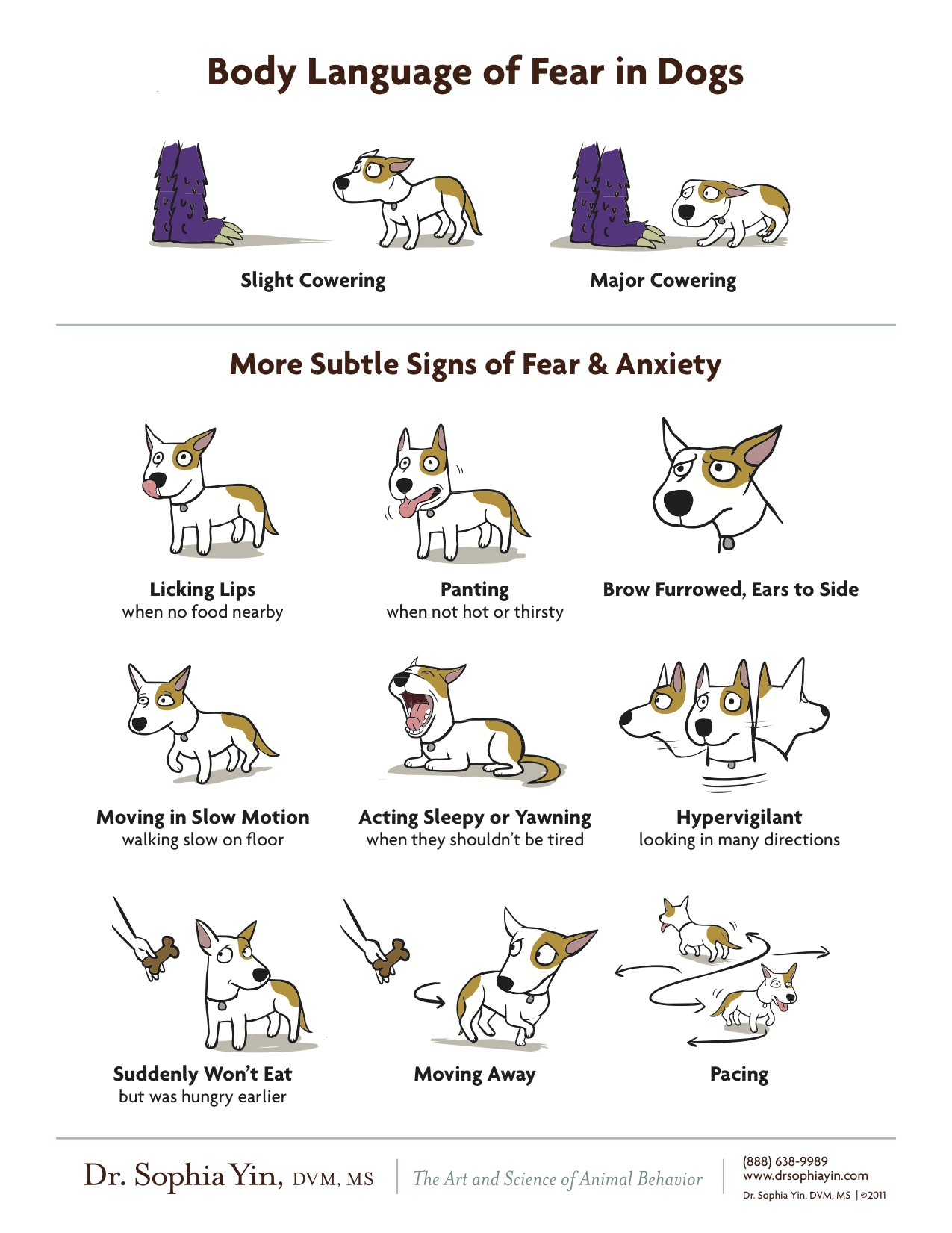
Body_Language_of_Fear_in_Dogs_by_Dr_Sophia_Yin

Preventing Dog Bites can be as simple as learning proper ways to meet and greet dogs correctly. Dr. Sophia Yin, DVM gives us 8 great tips on approaching, greeting and interacting with dogs safely.
Impulse Control - Great exercise for teaching your puppy (and older dog) that waiting for what he wants pays off better than trying to take it on his own.

Dog Parks:  Dog Parks provide a safe space in which you can excercise your dog and watch them socialize and play.  However, dog parks can also be stressful places too so it's important that you know the limitations of your dog and be mindful to act accordingly. Three articles worth reading before going to any dog park are the following;

Shaping Polite Walking with a High Rate of Reinforcement
by Helix Fairweather


Note:

return to previous step if your dog has difficulty, becomes frustrated or confused.

Gradually, by reinforcing each step and rewarding each success step by step, your dog will be leash walking politely in no time.


Frisbee Freestyle! by DOGSmart Associate and contributor Katherine Mutzke.  Follow Katherines's blog My Happy Houndz adventures

I LOVE finding ways to teach polite behaviours through play.  The behaviours you work on to teach a frisbee retrieve are:  give, take, stay, off, jump on cue ( and not on you) and focus.  Not to mention, the physical exercise and fun can't be beat!

*Puppies have a hoot learning this too,  just be careful to follow your veterinarian's guidelines about stress on their skeletal structure.

Easy as 1, 2, 3.  Start off by teaching:

1. "Give" and "Take" - building value to interact with the frisbee is the first step. Here's puppy Milo and Neil demonstrating how much fun playing "Give" and "Take" can be, just in itself!


Giving something up at first, means something better's coming their way 100% of the time. "Give", release the frisbee from your mouth  when I trade you for something of the same value (like another frisbee).   Even better yet I'll trade you for a favourite treat, then you can "Take" the frisbee back once you have four on the floor and focus your attention to me.   Soon the interaction of "Give' will mean the games begin!

2. Teaching "Jump" or POP! as I like to call it.


Dogs LOVE to jump when they're excited so this is their opportunity to jump up on cue, but not on you :P  If your dog knows how to hand target, just hold your hand above their head and have them target it, then put it on cue.

3. Add the frisbee and practice in place, so they find a rythmn in jumping and taking the frisbee.  Soon enough you'll be adding distance to your throws and you can be creative about the jumping tricks and retrieves!


Happy Jumping!


Teaching your dog to "Wave"
A plan to shape a dog to wave its paw using a clicker by Linda Dear

Assumption: that the dog already knows “shake a paw”.

  1. Cue the dog to shake a paw.
  2. Dog places paw in your hand.
  3. Click and reward.
  4. Cue the dog to shake a paw but raise your hand one inch higher than usual
  5. If dog places paw in hand, click and reward
  6. if dog does not place paw in hand, lower hand to usual position
  7. if dog places paw in hand, click and reward
  8. Continue steps 4 to 8 slightly increasing the height of the paw touch
  9. When you get your hand to the dog’s head height or just below, when the dog reaches out its paw to shake, remove your hand just before the dog’s paw touches it. The dog’s paw will drop down without your hand there.
  10. VOILA, you have a wave. Click and reward.

Note: if the dog does not give the behaviour at any step, go back to the previous step to get success again before carrying on. Do this very quickly so that there are many successes - clicks and rewards - within a matter of a few seconds. You want to get as many clicks as possible and as little "dead" time as possible.


Top 10 Training Tips from Patricia McConnell Ph.D:  We carry Patricia McConnell's booklets and books mentioned in this article in our DOGStore.


Trainer Linda Dear's Top 5 things she learned
from CLickerExpo, 2011.  168083_192551297422894_120921627919195_716731_1110671_n.jpgFollow Linda's blogs My Dog Sam & SmartyDogs
  1. The more you reinforce (click and reward) your dog's behaviour the faster and better your dog will learn the behaviour
  2. Beware and be aware of what behaviours you may be inadvertantly reinforcing (or maybe what the dog is training you to do!)
  3. Break down behaviours and plan what and how you want the dog to learn before attempting to teach the dog
  4. Set the dog up for success right from the start and be super observant to catch the dog for being "right".
  5. Keep it short!  Training in 10 one minute sessions with breaks gets better reults than training for 10 minutes.  Also, this gives the trainer a chance to evaluate and refocus if necessary.
168083_192551297422894_120921627919195_716731_1110671_n.jpg
Learning Lab


168083_192551297422894_120921627919195_716731_1110671_n.jpg